
How to Check Criminal History in Philadelphia
Choose the starting point by asking what happened in Philadelphia. A Philadelphia police report shows what the responding agency recorded. A Philadelphia custody result shows present detention. A Municipal Court docket shows the first filed criminal case, while a Common Pleas docket may continue a felony prosecution. PATCH shows what the Pennsylvania State Police repository disseminates. These Philadelphia records overlap, but none answers every question.
Use legal spellings and exact identifiers when possible. Philadelphia’s official record path works best in this order:
- Identify the Philadelphia Police district or other agency that created the report.
- Request the incident report or local police records check through the proper City channel.
- Search Philadelphia Municipal Court in UJS for the initial criminal docket.
- Check Common Pleas and the local custody locator if the case or detention continued.
- Use PATCH or PSP Access and Review when a Pennsylvania repository record is needed.
A missing Philadelphia result should prompt a spelling check, a second court-level search, and a call to the responsible office. It should not be treated as proof that no event occurred.
Philadelphia City-County Record System
Philadelphia is both the city and the county. It is the only incorporated city in Philadelphia County. There are no other city police departments or municipal courts inside the county, and neighborhoods such as Germantown or Manayunk are not separate municipalities. That structure makes the local record path more direct, yet it also defeats generic Pennsylvania instructions built around a county sheriff, county jail, and magisterial district judges.
The Sheriff’s Office does not run Philadelphia jails or serve as the main custodian of Philadelphia police arrest reports. The Philadelphia Department of Prisons holds local custody information. The Philadelphia Department of Records supplies most public-safety report copies. Philadelphia Municipal Court takes the lower-court role filled by magisterial district judges elsewhere in Pennsylvania. The Office of Judicial Records keeps the criminal court file.
The Census QuickFacts profile for Philadelphia supplies the official population context.
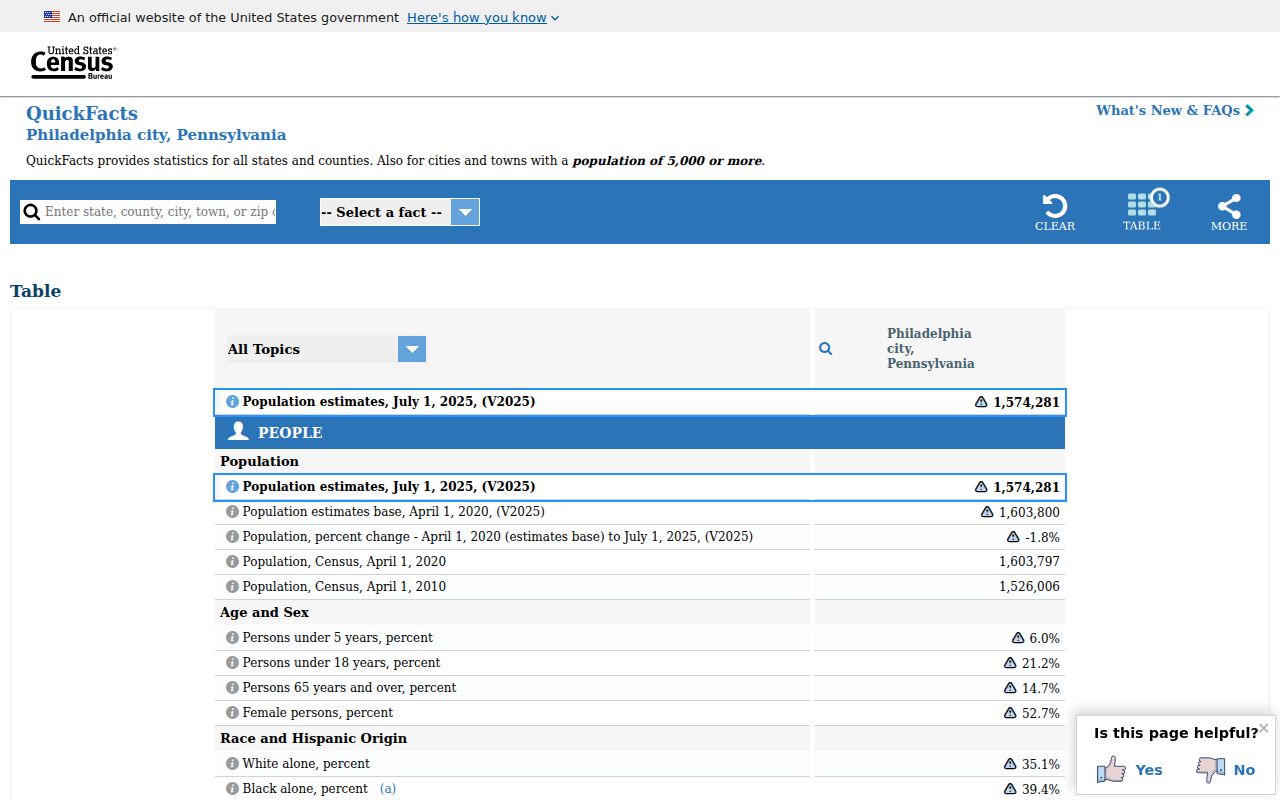
The July 1, 2024 estimate is 1,573,916. Crime or case counts need a stated period and this type of population denominator before they can be compared.
The Philadelphia Police Department
The Philadelphia Police Department is the city’s primary arresting and reporting agency. Its districts and specialized units create incident, offense, arrest, crash, and related records. Public copies do not all come from the district that wrote the report. The Department of Records runs the central public-safety-report process, while PPD’s Open Records/Right-to-Know Section handles other police records and Act 22 audio or video requests.
The official Philadelphia Police Department page identifies current department services.
The Philadelphia department page is an agency starting point, not a complete daily arrest log. Philadelphia has no verified comprehensive public booking blotter.
Public Safety Records
City Hall, Room 170
1400 JFK Blvd.
Philadelphia, PA 19107
(215) 686-2266
Weekdays, 8:30 a.m.-4 p.m.
PPD Open Records
400 N. Broad St., 4W-72
Philadelphia, PA 19130
(215) 686-3277
Find a Philadelphia Police District
A district search helps identify which Philadelphia unit created a report. That fact matters when the event number is unknown or another agency may have responded. SEPTA Transit Police and the police departments at Temple, Penn, and Drexel keep their own agency-created records. Those reports should be requested from the originating department unless PPD also made the report.
The official Philadelphia police district directory maps district stations and contact points.
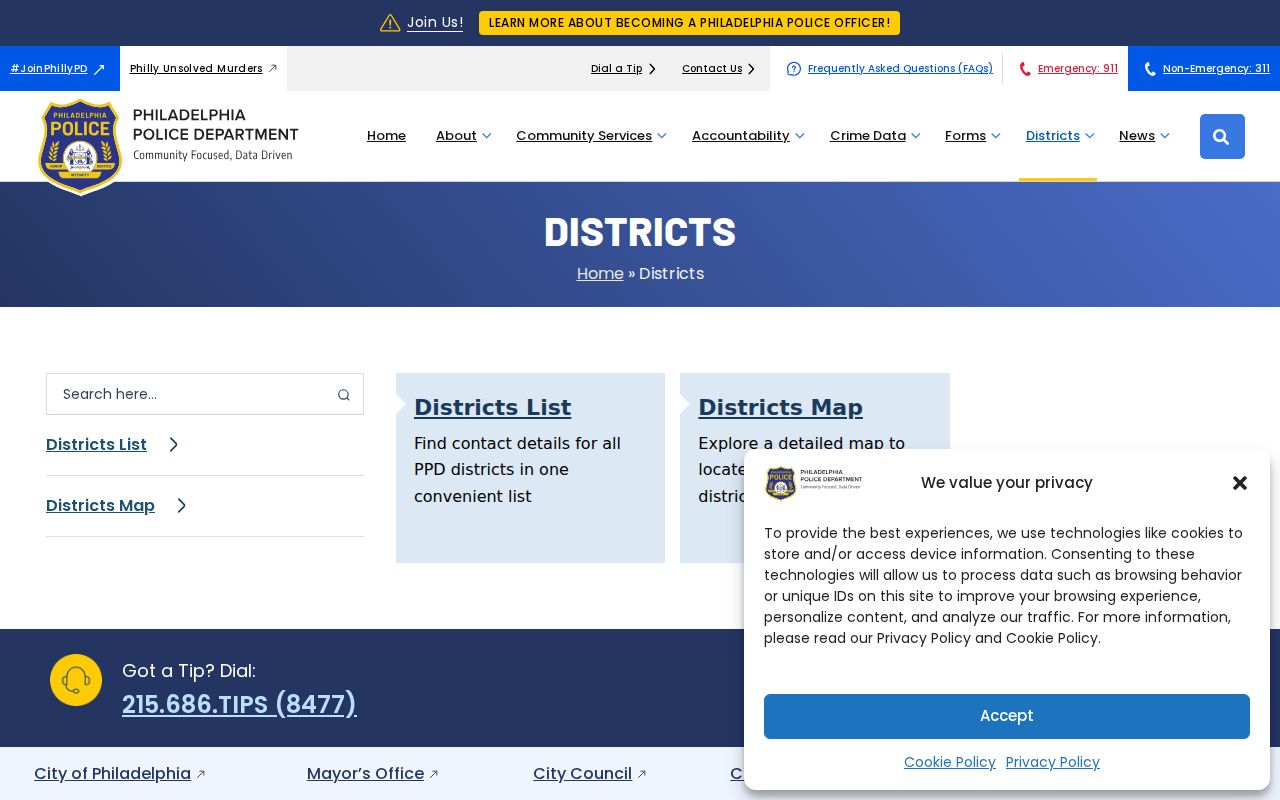
Once the Philadelphia district is known, still use the central Department of Records process for an ordinary incident or offense copy. Philadelphia district identification improves the request; it does not replace the records channel.
Arrests and Bookings in Philadelphia
Philadelphia books arrestees through police detention and the Philadelphia Department of Prisons, not through a separate city holding facility or a sheriff-run jail. Intake can create a photograph, fingerprints, property record, commitment, bail information, and custody location. The arresting agency sends reportable fingerprint and arrest data toward the PSP Central Repository. The District Attorney then decides which charges to file.
For a recent Philadelphia arrest, search the local incarcerated-person locator and call Prison Information at (215) 685-8394 if no result appears. A release, transfer, misspelled name, processing delay, or lack of a prison commitment can explain the gap. Search UJS next, first under Philadelphia Municipal Court and again under Common Pleas for a felony held for court.
A Philadelphia booking charge may change before the case reaches Common Pleas. It can be amended, withdrawn, dismissed, or replaced by a different count. A Philadelphia arrest is not proof of guilt, and release does not mean the case ended.
Philadelphia Criminal Report Counter
City Hall Room 170 is the practical counter for Philadelphia public-safety reports. Incident and offense applications may be mailed or delivered there. The City estimates 10 to 12 weeks for those police reports. The local police records check and letter of good conduct have a stated 10-day estimate. Crash and fire reports use an online application, but incident and offense reports remain mail or in-person products.
Bring or send enough facts to locate the Philadelphia record: report or DC number, event date and time, exact location, involved names as needed, requester relationship, identity or authorization, and a contact route. Cash, money order, business check, and certified check are accepted in this Philadelphia workflow. Personal checks and cards are not. The local police records check covers Philadelphia arrest information only, not a statewide Pennsylvania history.
| Philadelphia record | Channel | Key point |
|---|---|---|
| Incident or offense report | Mail or City Hall counter | City estimate is 10-12 weeks |
| Police records check | Mail or City Hall counter | Local arrest information only |
| Crash or fire report | Online City application | Eligibility and report details may be required |
| Police audio or video | PPD Act 22 channel | In person or certified mail under the special procedure |
Philadelphia Municipal Court Records
Philadelphia Municipal Court handles preliminary proceedings in felony matters and adjudicates many lower-level criminal cases. Philadelphia has no magisterial district courts. UJS Docket Sheets is the free public search. Select Philadelphia Municipal Court, use the criminal category, and search by participant or exact docket. A felony held for court can continue under a separate Common Pleas docket.
| Court Name | Philadelphia Municipal Court within the First Judicial District |
|---|---|
| Case Types Heard | Preliminary felony matters and many lower-level criminal prosecutions |
| Case Lookup Channel | Free UJS Docket Sheets search by participant or docket number |
| What the Docket Shows | Charges, bail, hearings, entries, dispositions, sentences, and financial data |
| Copies & Fees | Office of Judicial Records request; current copy and certification schedule controls |
Philadelphia public dockets summarize the prosecution. They do not contain every police report, photograph, recording, or evidentiary attachment. Underlying Philadelphia court records must be requested from OJR, while the originating agency handles its own police file.
Philadelphia Criminal Court Split
The same prosecution can produce two Philadelphia dockets. Municipal Court records the complaint and preliminary phase. If a felony is held for court, Common Pleas creates the later Criminal Trial Division file. Compare incident identifiers, defendant details, charge history, and filing dates before treating the two dockets as unrelated or duplicate cases.
The Stout Center at 1301 Filbert Street houses both Municipal Court criminal activity and Common Pleas criminal work. Older forms may call it the Criminal Justice Center or CJC. Those names refer to the same building, now named for Justice Juanita Kidd Stout. OJR Criminal answers record questions at (215) 683-7703.
Use the Philadelphia court docket to distinguish a charge from its outcome. Read every count. “Disposed” means outcomes were entered, not that every fine, restitution balance, probation term, or other obligation has finished.
Where Philadelphia Records End Up
A Philadelphia police report begins at the arresting agency. Detention and prison intake add fingerprints, custody identity, and commitment data. The District Attorney selects charges. Municipal Court opens the early docket, and Common Pleas takes a felony case held for trial. Courts and criminal-justice agencies send dispositions back to PSP so the state repository can connect an arrest cycle with its result.
Record flow: Philadelphia Police Department › Philadelphia Courts › Pennsylvania State Police Central Repository
Recent Philadelphia activity may appear first in local custody or police systems. A filed Philadelphia case appears in UJS. A later PATCH result depends on reporting and repository rules. Aliases, incomplete identifiers, processing lag, withdrawn charges, and limited-access orders can cause mismatch. For county-wide source comparisons, the Philadelphia County criminal history overview explains how the layers differ.
Philadelphia Custody Record Path
Four City facilities operate along State Road. Curran-Fromhold Correctional Facility is the largest site. The Detention Center, first opened as an intake institution, now has a major medical role. Philadelphia Industrial Correctional Center and Riverside Correctional Facility fill other local custody functions, with Riverside serving as the principal women’s facility.
Current Philadelphia custody belongs in the City locator or the Prison Information phone line. A sentenced state prisoner or state parolee belongs in the PA DOC Inmate/Parolee Locator. Federal custody belongs in the BOP locator. A Philadelphia facility location does not supply the final case outcome, so follow the linked docket in UJS when the prosecution matters.
Mail, funds, visits, and phone services follow current PDP rules. Confirm the present facility and committed name before using those service pages because transfers and vendor arrangements can change. The City also publishes a daily facility census, but that table reports aggregate custody totals and should never be mistaken for a named Philadelphia arrest roster.
Public Access Rules
Philadelphia police records are not open without limit. Pennsylvania’s Right-to-Know Law applies to many City agency records but preserves exemptions. Philadelphia court case access follows the UJS public-access policy. PSP dissemination follows the Criminal History Record Information Act. Philadelphia law-enforcement audio and video follow Act 22 rather than the ordinary RTKL route.
Key statutes and policies:
Pennsylvania Right-to-Know Law opens qualifying agency records while keeping listed exemptions.
18 Pa.C.S. § 9121 governs dissemination of Pennsylvania criminal-history information.
UJS public-access policy controls court custodians, requests, redactions, and protected data.
Victim information, juvenile material, personal identifiers, active investigative material, protected addresses, and sealed records may be withheld or redacted. A five-business-day City RTKL response is only the initial response. Production can take longer or be denied under a cited exception.
Philadelphia Criminal Justice Reforms
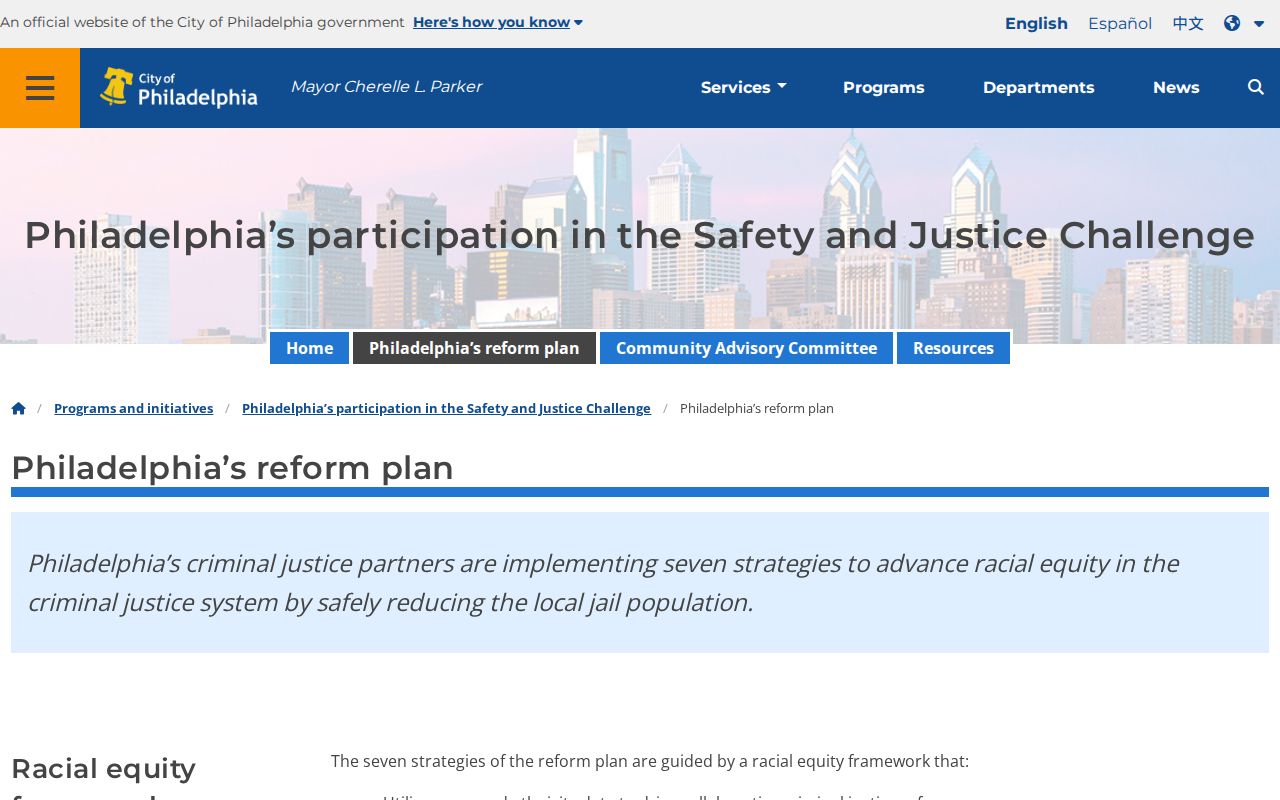
Philadelphia’s Safety and Justice Challenge named local changes that affect arrest and custody timelines. The Philadelphia work included bail advocates in police detention, detention review, long-stayer review, police-assisted diversion, probation early-termination review, and a 911 triage strategy. These are Philadelphia process reforms, not new record custodians. Police reports still come from City channels, case files from OJR, and custody data from PDP.
The official Philadelphia reform plan shows those named strategies.
A program may change or end. Verify current status before relying on it for a case decision or service referral. Another local milestone is the North Central Public Safety Building planned for the 22nd Police District and a PAL Center. The City’s 22nd District groundbreaking announcement documents the $40 million, 30,600-square-foot project.
The building adds a future district-level service site, but the central report and court channels remain the proper record sources.